
Author: Ian Church in: Machine Shops
Machine shops lose business for reasons that have nothing to do with their equipment or their operators, and the shops that figure this out are usually the ones who get serious about machine shop ERP software. A shop with five-axis CNC machines and 20 years of experience in tight-tolerance work still loses repeat customers to competitors who quote faster, deliver on time, and answer the phone with a real answer. The gap is operational visibility, not capability.
Most machine shops quote from experience. A shop manager looks at a print, thinks about what it takes to run a part like that, and puts a number together. When that number is wrong, the shop finds out weeks later, if at all.
Setup times are the most common culprit. Shops underestimate how long a first-off setup takes on a new part family, and that estimate gets baked into the quote as a standard. The next job goes out at the same rate, and so does the one after that. By the time someone notices the margin is gone, the shop has run a dozen jobs at a loss and has no data to explain why.
Scrap compounds the problem. When a scrapped part gets logged late or not at all, the actual cost of the job never surfaces cleanly and the shop ends up thinking it made money when the real number tells a different story.
ERP software for machine shops ties quote templates to real job history so estimates reflect what the work actually costs to run, not what someone remembers from a job done three years ago. Setup times, scrap rates, and run times by operation feed directly into the next quote, and the margin stops being a guess.
Most machine shop scheduling lives in one person’s head, a whiteboard, or a spreadsheet that someone updates every morning. That works when nothing changes. It breaks the moment a hot job arrives, a machine goes down, or a customer pushes a delivery in by two days.
When the schedule blows up, operators stop trusting it. They ask supervisors what to run next, supervisors make decisions based on whatever is loudest, and jobs that should have shipped Tuesday sit at a work center because nobody flagged them while a machine runs overtime on something that does not ship for two weeks.
The downstream effect is a missed delivery on a job the customer needed, followed by a conversation the shop manager did not want to have. Some customers give a second chance. Some find another shop.
Machine shop scheduling software keeps every work center connected to real-time job status. When a hot job comes in, the schedule adjusts and every operator sees what changes. The decision about what to run next is not a conversation; it is a visible queue.
When a customer calls asking where their order is, the right answer takes about 30 seconds while the wrong answer takes a walk to the floor, a check with the supervisor, and a callback.
That callback also signals something to the customer: the shop does not have real-time visibility into its own production. That is a reasonable thing to worry about when you are sourcing precision parts for an assembly line.
Job shop ERP software gives every customer-facing person in the shop a live view of where every job sits, what operation it is on, and when it is scheduled to ship. The callback becomes unnecessary, and the answer is accurate the first time.
A late delivery, an off-margin quote, and a fumbled status call are each small things. Together, they build a pattern that causes customers to quietly move volume to other suppliers. The shop does not lose the account in a single dramatic moment; it stops getting the next RFQ.
By the time the shop notices, the relationship has already shifted. Winning it back takes more than a price concession. It takes demonstrating that the operation runs differently now.
CNC shop management software gives shop owners and managers the operational layer to close that gap: accurate job costing, a schedule that holds under pressure, and real-time floor status that anyone in the shop can read.
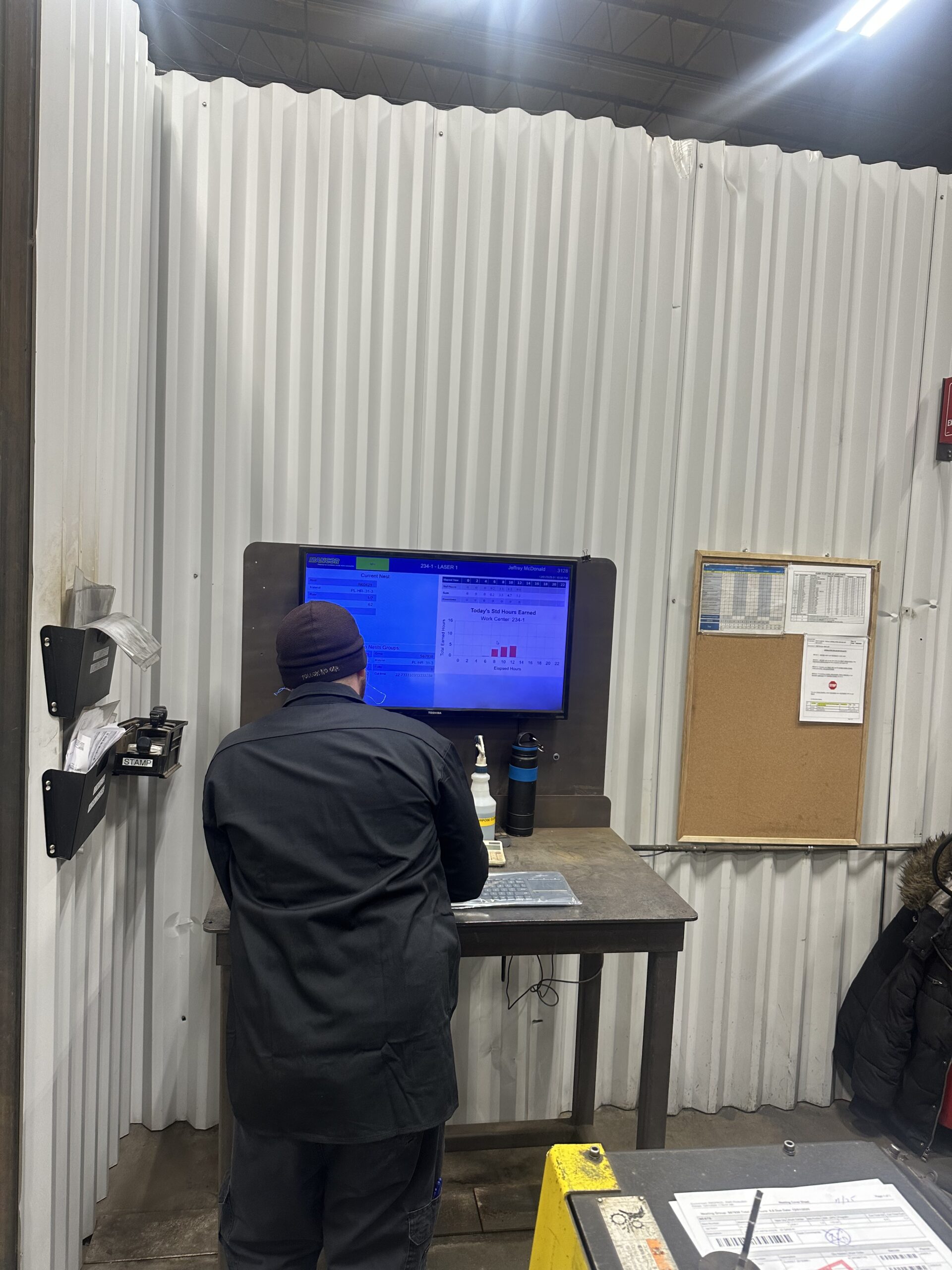
OnRamp is built inside Mancor Industries, a Tier 1 automotive fabrication and machine shop. The scheduling logic, the job costing, and the real-time floor visibility were all developed inside a live production environment, not in a lab. Machine shops with strong capability and weak operational data leave money on the table on every job they quote, every schedule they run, and every customer status call they fumble. Getting the operational layer right does not require new equipment or more people; it requires data that reflects what is happening on the floor.

For more information about how OnRamp ERP software can add value to your business fill in the contact form below. A member of our support team will contact you within 1 business day to discuss any questions you have.
Start the collaboration with us while figuring out the best solution based on your needs.


Our efforts began as an internal project of Mancor Industries when we identified the need for a more cohesive ERP system to manage the complexity of multiple plants, multiple products, multiple customers and multiple functions.
Read MoreHas your business outgrown a patchwork of disconnected systems? This checklist helps you assess readiness, identify gaps, and prepare for a smooth transition.


