
Author: Andrew Holmes in: Implementations
Growth exposes every weakness in your operation. Disconnected systems turn routine work into constant recovery. Quality lives in one tool. Scheduling lives in another. Inventory lives in spreadsheets. None agree. You spend your day reconciling data instead of running the shop.
The pain shows up fast.
OnRamp’s completely integrated ERP solution exists to stop this cycle. When every core function shares the same data, growth stops feeling chaotic and starts feeling controlled.
Disparate systems survive early growth. They fail under scale. Each system owns a slice of the truth. Your team stitches them together by hand. Errors compound with every order.
You see it daily:
More work increases noise, not output. Control erodes.
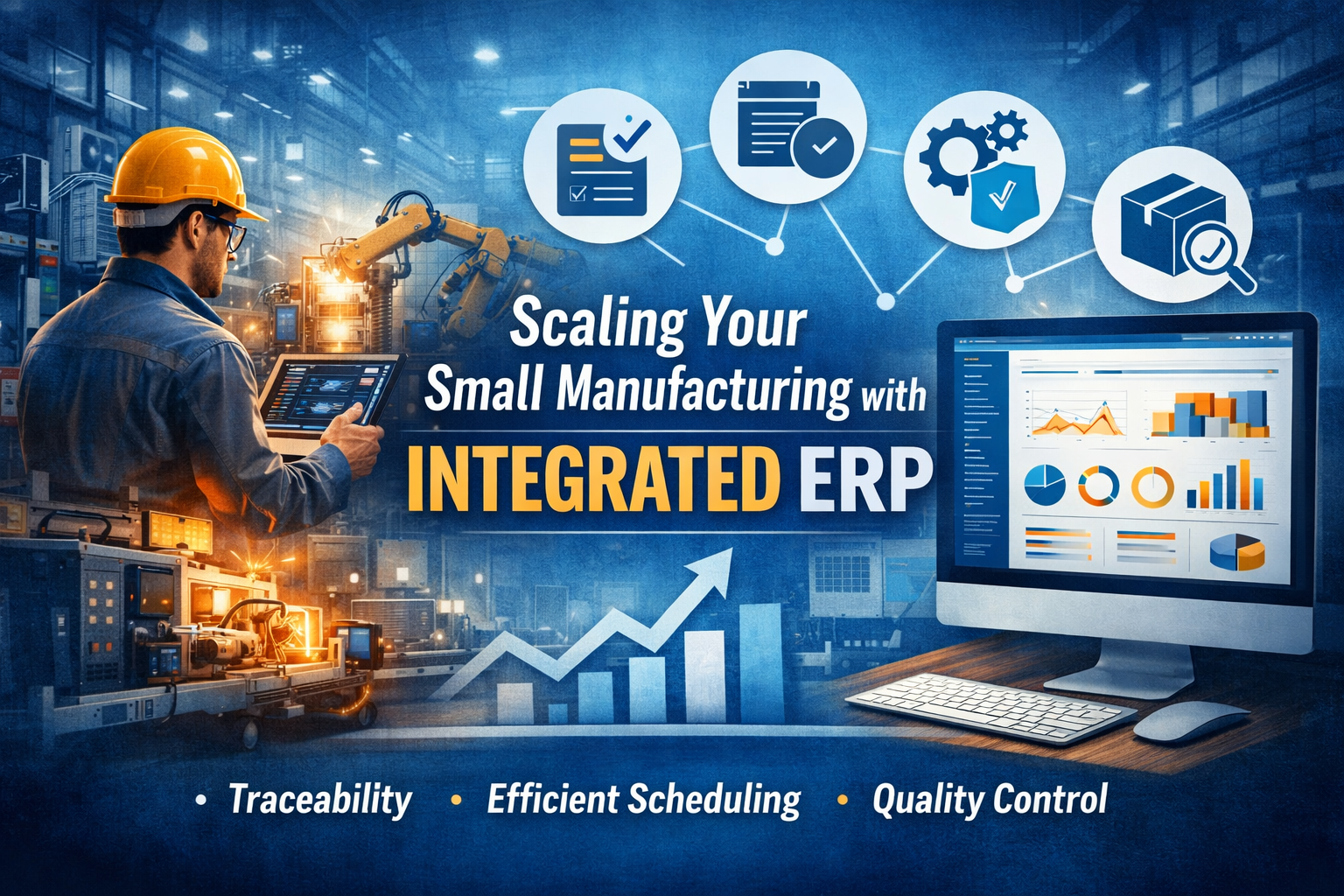
A completely integrated ERP solution connects inventory, production, quality, scheduling, purchasing, and shipping around one shared data model. No syncing. No re-entry. No shadow systems. When one process updates, every related process reflects it.
You gain:
Your systems stop arguing. Your team stops translating.
Scheduling fails when systems operate in isolation. Plans ignore material availability. Capacity assumptions miss reality. A completely integrated ERP solution ties scheduling directly to inventory, labor, machines, and purchasing.
You avoid:
Schedules become commitments, not guesses.
Quality breaks down when it lives outside operations. Inspections lag. Nonconformances scatter. Root causes remain unclear. With a completely integrated ERP solution, quality data connects directly to jobs, materials, and processes.
You get:
When issues surface, you trace fast, contain impact, and respond with facts.
Delayed feedback keeps problems alive. A completely integrated ERP solution closes the loop between planning, execution, and results.
You see:
Issues surface while work still runs, not weeks later in reports.
ERP success comes from integration, not accumulation.
Focus on connecting what already matters most:
Each connection removes friction. Each integration restores control. Growth does not require chaos. Missed dates, lost traceability, and quality drift come from disconnected systems.
A completely integrated ERP solution keeps your data aligned as volume rises. Your team stays focused. Your standards hold.
Many so-called ERP offerings stitch together acquired products and call it integration. You feel the gaps immediately. Data sync delays. Conflicting numbers. Workarounds nobody trusts.
Private equity backed rollups often leave you with:
This is not integration. This is fragmentation with a new logo.
A completely integrated ERP solution shares one data model across the business. Inventory, production, quality, maintenance, and shipping operate from the same foundation. The result is clarity, control, and confidence as you scale.
If your current ERP requires constant translation between modules, it is time to demand better. Choose an ERP built to work as one, not assembled over time.

For more information about how OnRamp ERP software can add value to your business fill in the contact form below. A member of our support team will contact you within 1 business day to discuss any questions you have.
Start the collaboration with us while figuring out the best solution based on your needs.


Our efforts began as an internal project of Mancor Industries when we identified the need for a more cohesive ERP system to manage the complexity of multiple plants, multiple products, multiple customers and multiple functions.
Read MoreHas your business outgrown a patchwork of disconnected systems? This checklist helps you assess readiness, identify gaps, and prepare for a smooth transition.


